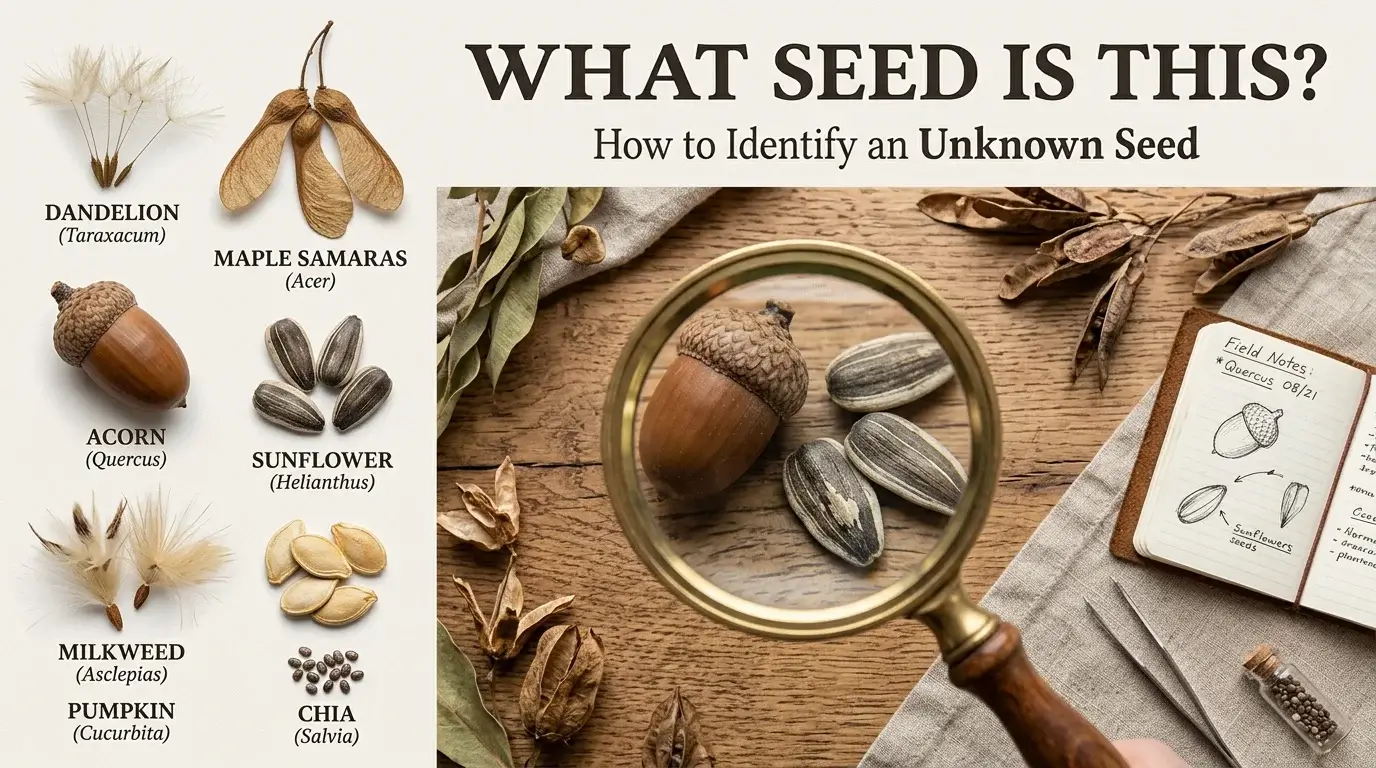
You can identify an unknown seed by comparing its shape, size, color, surface texture, markings, and hilum, along with clues about where it came from. A clear photo can also help narrow down possible matches, especially when the seed has distinctive features.
Have a photo of the seed? Upload a clear picture to our Seed Identifier to find possible matches.
How to Identify an Unknown Seed
Seed identification works best when you compare several characteristics rather than relying on one feature. Start with the features you can see easily, then look more closely at smaller details.
1. Check the Seed’s Shape
Start by looking at the seed’s overall shape. Seeds may be round, oval, elongated, flat, kidney-shaped, teardrop-shaped, winged, or irregular.
Look at the seed from more than one angle. A seed that appears round from above may look flat or curved from the side. Shape is useful for narrowing the possibilities, but it works best when combined with size, surface features, and other clues.
2. Measure the Seed’s Size
Measure the seed’s length and width in millimeters (mm) if possible. Exact measurements are more useful for identification than simply describing a seed as small or large.
If you are working from a photo, place a ruler beside the seed before taking the picture. This provides a scale reference and makes it easier to compare the seed with reference images or descriptions.
3. Examine Its Color and Pattern
Look at the seed’s main color and any visible patterns. Seeds may be brown, black, tan, cream, reddish, greenish, or a mixture of colors. Some have spots, stripes, speckles, mottling, or contrasting patches.
Don’t identify a seed by color alone. Age, maturity, storage conditions, and damage can affect its appearance, and unrelated plants may produce seeds with similar colors.
4. Look at the Surface Texture
Examine the seed coat, or testa, which is the seed’s protective outer covering. Its surface may be smooth, rough, glossy, dull, wrinkled, ridged, pitted, or hairy.
These details can be easier to see with a magnifying glass or a sharp close-up photo. Pay attention to unusual grooves, ridges, hairs, wings, or other structures that could help distinguish the seed from similar species.
5. Find the Hilum and Other Markings
The hilum is the scar or area where the seed was attached to the parent plant. Depending on the seed, it may appear as a small line, spot, oval, or differently colored area on the seed coat.
Look at its shape, position, size, and color. The hilum may provide an additional clue when two seeds otherwise look similar.
6. Consider Where the Seed Came From
Context can be just as useful as the seed itself. Think about where you found it and whether any part of the parent plant is still available.
For example, check whether the seed came from a fruit, pod, seed head, flower, tree, weed, or garden plant. Photos of nearby leaves, flowers, stems, fruit, or pods can provide additional clues about the plant family or species.
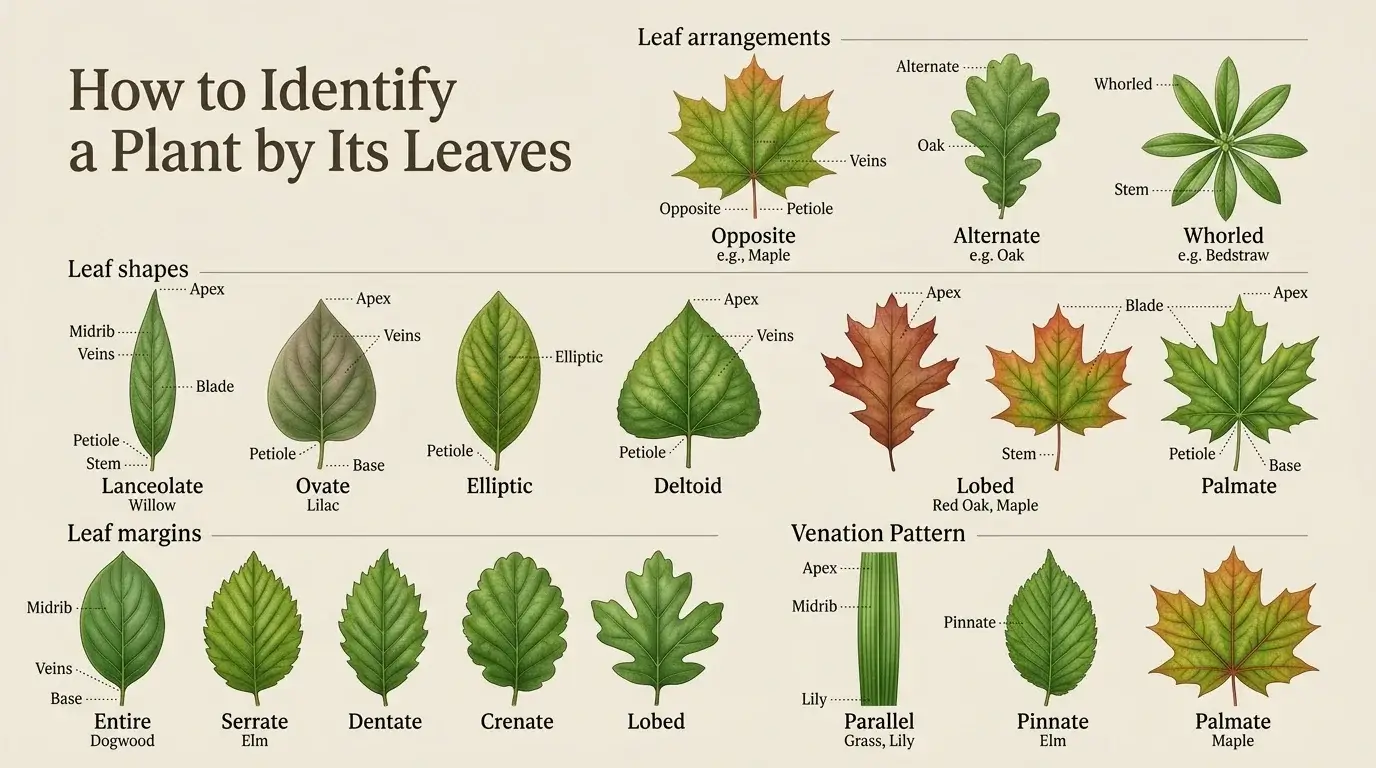
If you still have the parent plant, you can also use a plants identifier online to examine the whole plant from a photo. Identifying its leaves, flowers, or overall appearance can provide useful context for confirming where an unknown seed came from.
For a stronger identification, compare shape + size + color + surface + markings + hilum + context rather than relying on a single characteristic.
Seed Identification Features at a Glance
| Feature | What to Look For |
| Shape | Round, oval, flat, elongated, kidney-shaped, winged, or irregular |
| Size | Length and width measured in millimeters (mm) |
| Color | Brown, black, tan, cream, reddish, greenish, or mixed colors |
| Pattern | Spots, stripes, speckles, mottling, or distinctive markings |
| Surface | Smooth, rough, glossy, dull, wrinkled, ridged, pitted, or hairy |
| Hilum | Shape, position, size, color, and appearance of the attachment scar |
| Context | Fruit, pod, seed head, flower, leaves, habitat, or parent plant |
How to Identify a Seed From a Picture
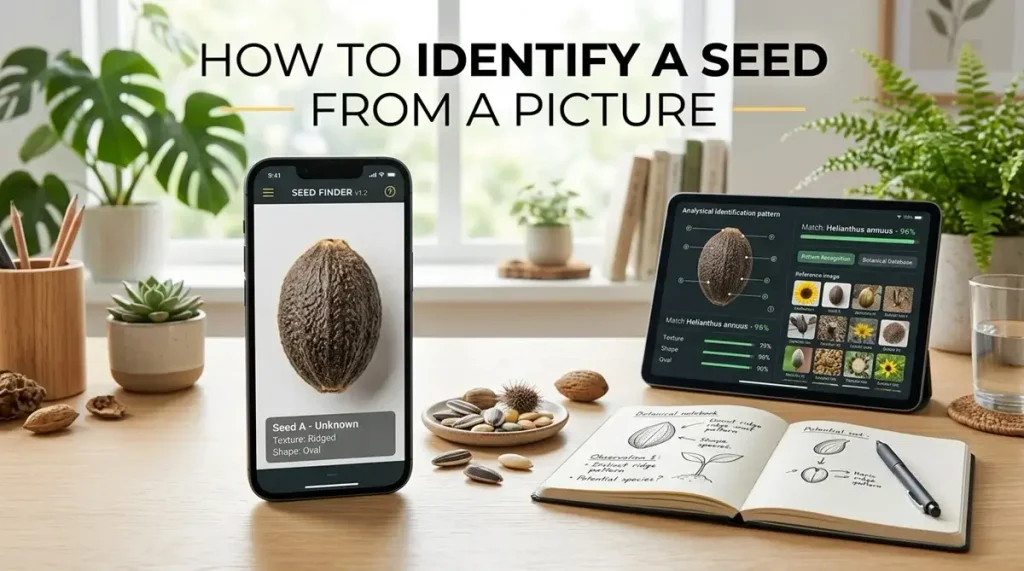
A clear picture can help with seed identification by photo, but the image needs to show the features that distinguish one seed from another.
Place the seed on a plain background that contrasts with its color. Use bright, even lighting and make sure the seed is sharply focused. Take photos of both sides and, when useful, from different angles.
Include a ruler or another scale reference beside the seed so its actual size can be estimated. If you found several seeds together, photograph more than one specimen because small differences or shared features may be easier to notice as a group.
Don’t photograph only the seed if other plant material is available. Take pictures of the pod, fruit, seed head, flower, leaves, or parent plant as well. These contextual clues can make it much easier to narrow down possible species.
Upload your clearest photo to our Seed Identifier to check for possible matches. Compare the suggested identification with the seed’s physical features and where you found it before treating the result as confirmed.
How to Tell Similar-Looking Seeds Apart
Two seeds can share the same general color and shape while coming from different plants. To separate similar-looking seeds, compare their characteristics one by one.
Start with exact size because a few millimeters can be a useful distinction. Next, compare the overall shape and look closely at the seed coat for differences in texture, grooves, ridges, pits, hairs, or markings.
The hilum can provide another clue. Its position and appearance may differ even when the seeds look similar at first glance.
Finally, consider the plant context. A seed found inside a particular fruit or pod provides more information than the same seed photographed by itself.
A visual match should therefore be treated as a likely or possible identification until several characteristics agree.
Why Some Seeds Are Difficult to Identify
Not every seed can be identified confidently from appearance alone. Closely related plant species may produce seeds with very similar shapes, colors, and surface features.
The condition of the seed also matters. An immature seed may look different from a mature one, while an old, damaged, weathered, or poorly stored seed may have changed color or lost useful surface details.
Very small identifying characteristics may also be difficult to capture in an ordinary photograph. In some cases, the available features may narrow an unknown seed only to a plant family or genus rather than an exact species.
For these reasons, photo or automated identification is best treated as a starting point when similar species are possible.
What to Do If You Still Can’t Identify the Seed
If the first attempt doesn’t produce a convincing match:
- Take another photo in better lighting and from a different angle.
- Measure the seed carefully in millimeters.
- Use a magnifying glass to examine tiny surface features.
- Photograph the parent plant or any available fruit, pod, flower, or leaves.
- Compare several seeds if multiple specimens came from the same source.
- Check reliable botanical or seed-reference resources against the characteristics you observed.
- Seek expert identification if knowing the exact species is important.
More information is usually more useful than repeatedly comparing the same single photograph.
Common Seed Identification Mistakes
Relying Only on Color
Color is easy to notice, but it isn’t enough for a reliable identification. Many unrelated seeds are brown, black, tan, or cream, and a seed’s color can change as it matures, ages, or becomes weathered.
Ignoring the Seed’s Actual Size
Two seeds can look nearly identical when photographs are displayed at the same size. Measure the seed or include a scale reference so you can compare its real dimensions.
Using a Blurry or Poorly Lit Photo
A blurry image can hide pits, ridges, hairs, markings, and other useful details. Use even lighting, keep the camera steady, and focus closely on the seed’s surface.
Looking at Only One Side
Important features may not be visible from every angle. Photograph both sides and check the edges or attachment area when possible.
Ignoring the Parent Plant or Pod
The seed’s source can dramatically narrow the possibilities. A pod, fruit, flower, leaf, or seed head may provide clues that aren’t visible on the loose seed itself.
Assuming the First Match Is Correct
A similar-looking reference image isn’t confirmation by itself. Compare the seed’s size, shape, surface, markings, hilum, and context before settling on an identification.
Safety note: Do not eat an unknown seed or assume it is safe based only on its appearance, a photo match, or an automated identification. When safety depends on knowing the species, seek reliable expert identification.