
Identify Any Tree Instantly with AI
or scan using your device
JPG, PNG, WEBP · Max 10MB
Studying bark profile, canopy shape, and botanical taxonomies...
Upload a tree photo and discover the species in seconds with our AI-powered Tree Identifier. The tool scans leaves, bark, flowers, fruit, cones, and tree shape to help identify trees quickly and accurately.
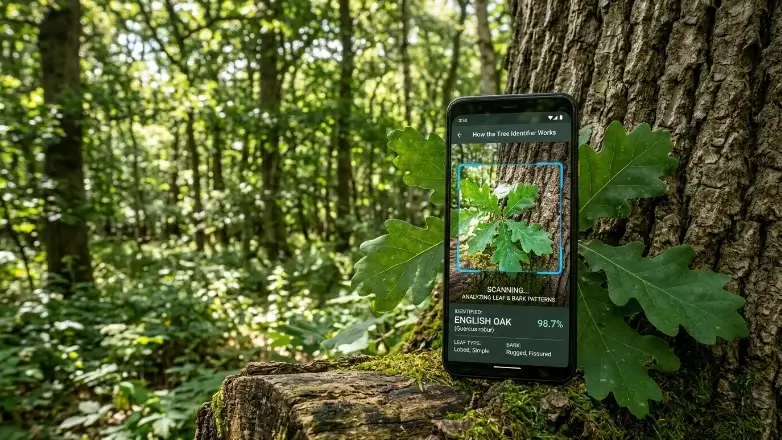
You may receive the common name, scientific name, visual matches, botanical details, and a confidence score. Accurate tree identification helps gardeners, students, hikers, landscapers, and nature enthusiasts learn more about the trees around them.
Our AI tree recognition tool helps users identify trees online using advanced image recognition and machine learning. Simply upload a clear image, and the system compares visible features with a large species database.
The Tree Identifier may provide:
The Tree Identifier analyzes visual patterns found in your uploaded image.
Take a photo of the full tree, leaves, bark, flowers, fruit, or cones. Clear images help improve identification accuracy.
The system checks important characteristics such as:
The AI compares your image with thousands of known tree species stored in the database.
The tool generates likely species matches and assigns confidence scores based on visual similarity.
You may receive:
The AI tree scanner studies multiple tree features at the same time.
Tree Feature | Why It Matters |
Leaf Shape | Helps separate species quickly |
Bark Texture | Useful for mature tree identification |
Crown Shape | Reveals overall growth habit |
Needles or Cones | Important for evergreen species |
Flowers and Fruit | Helps narrow species matches |
Seasonal Color | Useful during autumn changes |
Branch Pattern | Supports advanced species recognition |
Different combinations of these features help the tool identify tree species more accurately.
Follow these simple steps for better results.
Outdoor lighting helps the AI detect colors, texture, and leaf details more accurately.
Leaves often provide the fastest identification clues. Photograph both sides if possible.
Rough, peeling, smooth, or cracked bark patterns help identify mature trees.
These features can strongly improve species matching.
A wide photo helps the system understand canopy shape and growth habit.
Sharp, focused photos improve recognition accuracy.
Different angles give the AI more visual information to analyze.
Quick Tip
One clear leaf image plus one bark image usually gives better results than a distant tree photo alone.
Use these visual clues to identify trees faster.
Visual Clue | Possible Tree Type |
Needle leaves | Pine, spruce, fir |
White peeling bark | Birch |
Acorns | Oak |
Fan-shaped leaves | Ginkgo |
Drooping branches | Willow |
Large palm fronds | Palm tree |
Bright red autumn leaves | Maple |
Woody cones | Conifer species |
These clues work best when combined with bark and canopy shape.
Leaves are one of the easiest tree features to recognize. Some leaves look like stars, while others look oval, narrow, or heart-shaped.
Maple leaves often resemble an open hand with pointed fingers. Willow leaves usually appear long and narrow.
Common Leaf Types
Bark changes as trees age. Some bark becomes rough and deeply cracked, while other bark peels in thin layers.
Birch trees often have pale peeling bark. Pine bark usually looks thick and scaly.
Common Bark Textures
Tree shape can reveal useful identification clues even from far away.
Spruce trees often grow in a cone shape. Oak trees usually develop broad spreading crowns.
Common Crown Shapes
Many tree species become easier to identify during flowering or fruiting seasons.
Pine trees produce cones. Maple trees often develop winged seeds called samaras.
Useful Reproductive Features
Seasonal appearance can dramatically change how trees look.
Deciduous trees often lose leaves during autumn or winter. Evergreen trees usually keep their needles or leaves throughout the year.
Autumn colors can also help identify species:
Species: English Oak
Scientific Name: Quercus robur
Confidence Score: 91%
The uploaded image strongly matched common oak characteristics, including lobed leaves, acorns, bark texture, and crown shape.
Oak trees usually have lobed leaves, rough bark, and acorns.
Maples are known for pointed leaves and bright autumn colors.
Pine trees produce cones and grow needle-like leaves.
Birch trees often have thin white peeling bark.
Cedars usually feature scale-like leaves and aromatic wood.
Palm trees have tall trunks and large feather or fan-shaped leaves.
Willows commonly grow long narrow leaves and drooping branches.
Spruce trees usually develop sharp needles and cone-shaped crowns.
Understanding tree groups helps beginners identify species faster.
Evergreen Trees | Deciduous Trees |
Keep leaves year-round | Lose leaves seasonally |
Often have needles | Usually have broad leaves |
Pine and spruce are common | Maple and oak are common |
Stay green in winter | Change color in autumn |
Evergreen trees are common in colder climates, while deciduous trees often display colorful seasonal changes.
Different tree parts help identify species in different seasons.
Leaf shape, edge patterns, veins, and arrangement provide strong identification clues.
Bark becomes especially useful during winter when leaves are missing.
Fruit, cones, acorns, berries, and seed pods can confirm tree species quickly.
Combining all three methods usually produces better results than relying on a single feature.
Correct tree identification can help with:
Tree identification also helps users better understand native habitats and local ecosystems.
AI tree recognition can be highly useful, but results are not always perfect.
Several factors may affect accuracy:
Confidence scores are estimates based on visual similarity. Higher scores usually suggest stronger matches, but results should still be reviewed carefully.
Important Transparency Note
The Tree Identifier is designed for educational and informational use. Always confirm important forestry, ecological, or toxic plant decisions with a qualified expert or arborist.
Best Practices for Photo Uploads
Best Photo Combination
For highest accuracy, upload:
This tool is useful for:
No botanical experience is required.
Need help identifying other plants too?
These tools work well together for complete plant recognition.
Discover tree species faster with AI-powered image recognition. Upload a clear photo of leaves, bark, cones, fruit, or the full tree and get instant identification help.
Whether you are hiking, gardening, studying, or exploring nature, the Tree Identifier makes tree recognition simple and beginner-friendly.
CTA: Upload Your Tree Photo and Identify Any Tree Species Now
Our AI achieves up to 95% accuracy for common species and provides a confidence score.
Fresh leaves give the most accurate results; dried leaves may reduce accuracy.
JPEG, PNG, and HEIC are fully supported.
Uploaded photos are not stored; all analysis is temporary and secure.
The tool requires an internet connection for AI analysis.
Free Plants Identifier helps you identify plants instantly using advanced tools and guides. Learn about plants, care tips, and nature easily in one place.
© 2026 Free Plants Identifier. All Rights Reserved.