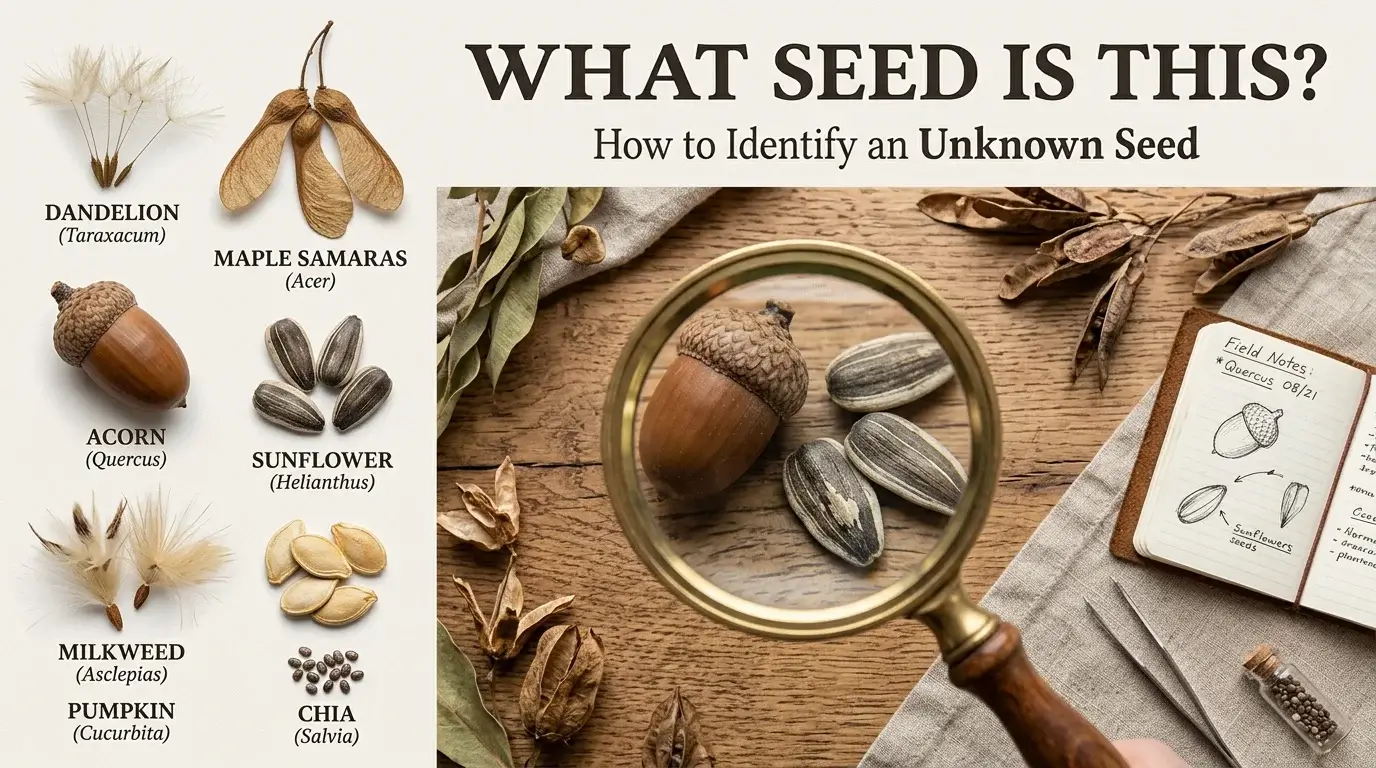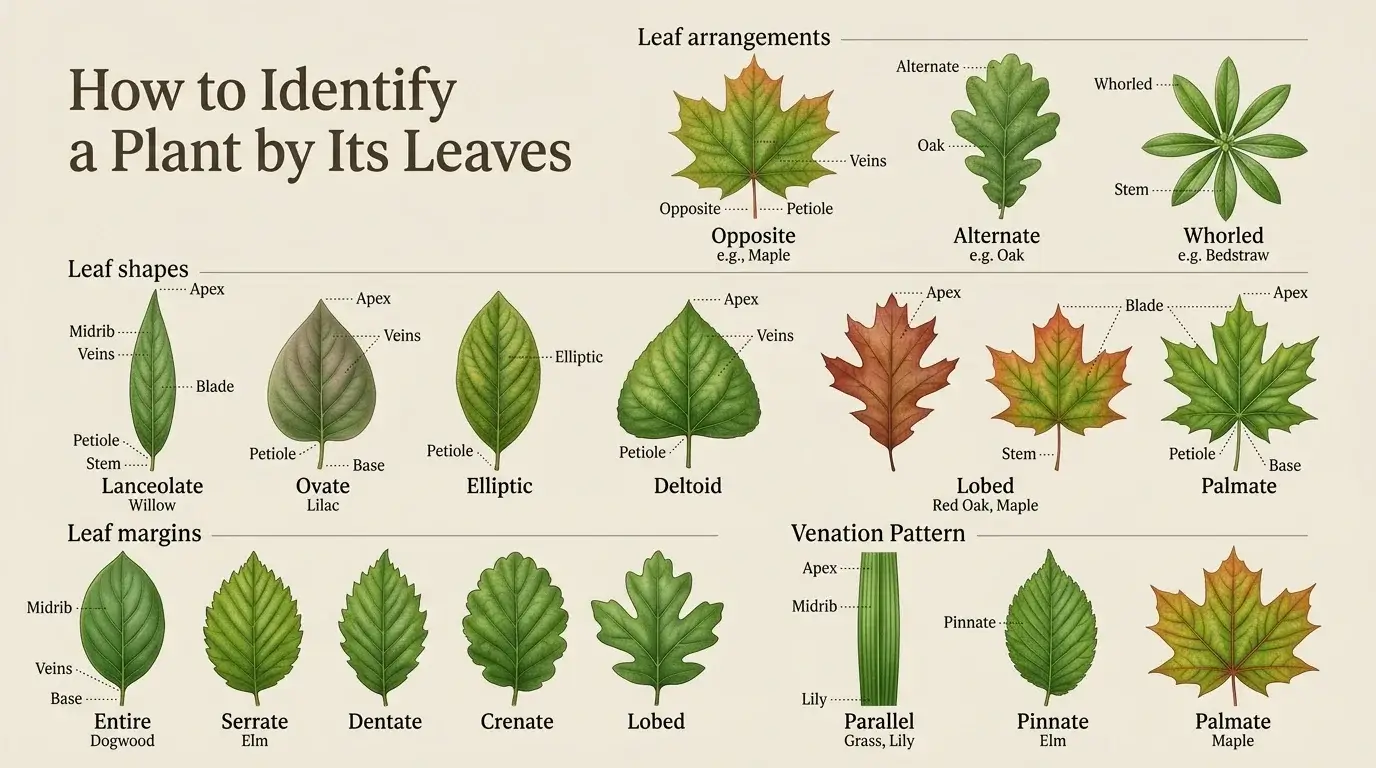

If you want to know how to identify seeds from a picture, start with the features you can actually see: shape, size, color, surface texture, markings, and the seed scar. A clear close-up photo can often help narrow down the possibilities, especially when it includes something for scale.
Already have a photo? Upload it to our Seed Identifier to check possible matches. You can then compare the result with the seed’s visible features and, when available, clues from the pod or parent plant.
How to Identify Seeds From a Picture Step by Step
A seed’s appearance can provide several useful clues, but one feature rarely tells the whole story. The best approach is to compare shape, size, texture, markings, and plant context together.
1. Start With the Seed’s Shape
Look at the seed’s overall outline. Is it round, oval, flat, elongated, kidney-shaped, irregular, or winged?
Shape is a useful starting point because it can quickly narrow down the possibilities. However, seeds from different plants can share a similar outline, so don’t identify a seed based on shape alone.
2. Estimate Its Size
Next, check the seed’s approximate length, width, and diameter. Size can help separate seeds that otherwise look very similar in pictures.
The problem is that photos don’t show actual size unless there is something to compare against. A tiny seed photographed up close may look as large as a much bigger seed. Place a ruler, coin, or another familiar object beside it when taking the picture.
3. Examine the Color and Pattern
Note the main color of the seed and any visible patterns. Seeds may be brown, black, tan, cream, reddish, pale, speckled, striped, or mottled.
Color can help narrow down a match, but it isn’t always reliable by itself. Maturity, age, storage, and lighting can all affect how a seed looks in a photograph.
4. Look Closely at the Surface Texture
Zoom in and examine the seed coat. Look for a surface that is smooth, rough, glossy, dull, wrinkled, ridged, pitted, hairy, or fuzzy.
Fine surface details can be particularly useful when two seeds have a similar size and shape. If you can’t clearly see the texture, take another close-up rather than trying to guess from a blurry image.
5. Check for Distinctive Markings
Look for anything that makes the seed different from a simple round or oval object. This may include grooves, ridges, spots, stripes, hairs, hooks, wings, or other projections.
Also note where these features appear. A groove along one side or a patch around the attachment area can be more useful for comparison than color alone.
6. Find the Seed Scar
Look for the point where the seed was attached inside the fruit or pod. This scar is called the hilum, and it may appear as a small line, patch, indentation, or differently colored area.
Its size, shape, and position can provide another clue when comparing similar-looking seeds.
7. Use Clues From the Parent Plant
If you found the seed still attached to a plant, don’t photograph only the seed. Take pictures of the seed pod, fruit, seed head, leaves, flowers, and stem as well.
Context can make identification much easier. Even knowing whether the seed came from a tree, garden flower, weed, fruit, or vegetable can help narrow the possibilities.
What Seed Features Should You Look For?
When comparing an unknown seed with reference pictures or possible matches, focus on several characteristics at the same time.
| Feature | What to Look For | Why It Helps |
| Shape | Round, oval, flat, elongated, kidney-shaped | Narrows down possible seed types |
| Size | Length, width, diameter | Separates similar-looking seeds |
| Color | Brown, black, tan, cream, mottled | Adds a supporting visual clue |
| Texture | Smooth, rough, wrinkled, ridged, pitted | Helps distinguish similar seeds |
| Markings | Spots, stripes, grooves, patterns | May reveal distinctive features |
| Seed coat | Hard, thin, glossy, dull | Provides another comparison point |
| Seed scar | Hilum or attachment area | Can help separate similar seeds |
| Special features | Wings, hairs, hooks, projections | May significantly narrow the possibilities |
No single characteristic should automatically determine the identification. A possible match becomes more useful when the shape, size, texture, markings, and other visible features agree.
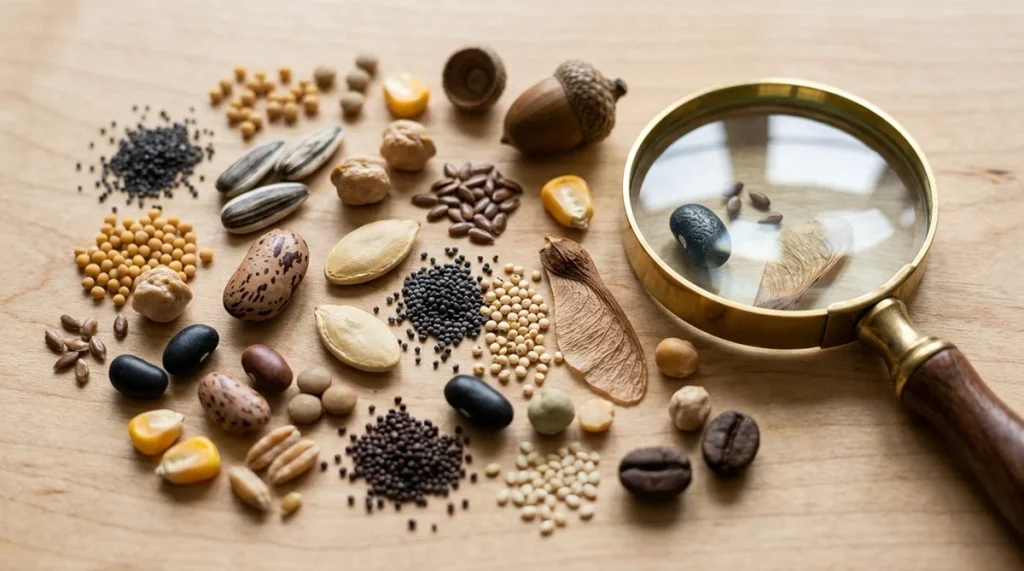
How to Take a Clear Seed Picture for Identification
Photo quality matters because an identification can only use details that are visible in the image.
Place the seed on a simple background that contrasts with its color. A pale seed is easier to see against a darker surface, while a dark seed usually stands out better against a light background.
Use bright natural or indirect light and make sure the camera focuses on the seed rather than the background. Get close enough to capture surface details without making the image blurry.
Take pictures from more than one angle, including both sides if possible. If you have several seeds from the same source, photograph them together to show any natural differences.
Most importantly, include a size reference. A ruler is ideal, but a coin or another familiar object can still provide useful scale.
If the seed is still associated with a pod, fruit, seed head, or plant, photograph those too. These extra images can provide useful context when the seed alone is difficult to identify.
How to Use a Seed Identifier From a Photo
Manually comparing an unknown seed with reference pictures can take time, especially when many species have similar seeds. A Seed Identifier can help narrow down possible matches from a clear image.
Start by uploading your best close-up photo. Images that clearly show the seed’s outline, surface, and markings are more useful than distant or blurry pictures.
Once you receive a possible match, compare it with the physical seed. Check whether the size, shape, texture, markings, and attachment area agree. If the seed came from a known pod or plant, use those clues as part of the comparison too.
If the result seems uncertain, try a second photo from another angle. Image-based identification is most useful as a way to narrow down possibilities rather than as proof of a species in every case.
Why Some Seeds Are Hard to Identify From a Picture
Some seeds have distinctive shapes or surface features, while others look almost identical in ordinary photographs. Closely related plants can also produce seeds with only subtle differences.
A few common problems make photo identification harder:
- The picture is blurry or taken from too far away.
- There is no ruler or other size reference.
- The seed is immature, old, broken, or damaged.
- Lighting changes how its color appears.
- Only one side of the seed is visible.
- Several possible species have similar seeds.
- The seed has been separated from its pod or parent plant.
When this happens, avoid relying on the closest-looking image alone. Compare several characteristics and gather more context whenever possible.
Can You Identify a Plant From Its Seed Alone?
Sometimes, but not always. Some plants produce distinctive seeds that provide strong identification clues, while others have seeds that are difficult to distinguish without seeing more of the plant.
If the parent plant is available, photograph its leaves, flowers, fruit, stems, and overall growth habit. Using a plant identifier online with these additional features can help when the seed alone doesn’t provide enough information.
The pod or fruit can be especially useful because it shows how the seeds were arranged and attached. Combining these clues with the seed’s visible characteristics can help narrow down the possibilities.
What to Do If You Still Can’t Identify the Seed
If your first attempt doesn’t produce a convincing match, try improving the evidence rather than choosing the closest-looking seed.
Take another sharp close-up and photograph the opposite side. Add a ruler for scale, and include several seeds from the same source if you have them.
Next, look for context. A picture of the pod, fruit, seed head, or parent plant may provide clues that aren’t visible on the seed itself.
Compare more than one possible match and look for agreement across size, shape, surface texture, markings, and attachment features. For cases where an exact species identification matters, use reliable botanical references or seek expert confirmation.
Safety note: Don’t eat an unknown seed or assume it is safe to consume based only on a photo-based identification.