You can identify many plants by comparing their leaf arrangement, shape, edges, veins, and texture. Start by looking at how the leaves attach to the stem and whether each leaf is simple or compound. Then compare several healthy leaves rather than relying on a single feature.
If you already have a clear photo, you can also upload it to our Leaf Identifier to find possible plant matches.
How to Identify a Plant by Its Leaves
Start with features that are easy to see and compare. A useful identification process is:
- Check how the leaves are arranged on the stem.
- Determine whether each leaf is simple or compound.
- Look at the overall leaf shape.
- Examine the edges or margins.
- Check the vein pattern.
- Look at the surface and texture.
- Compare the size, color, and other visible plant features.
Try to examine several healthy, mature leaves. Leaves on the same plant can sometimes differ because of age, growing conditions, damage, or their position on the plant.
Check How the Leaves Are Arranged on the Stem
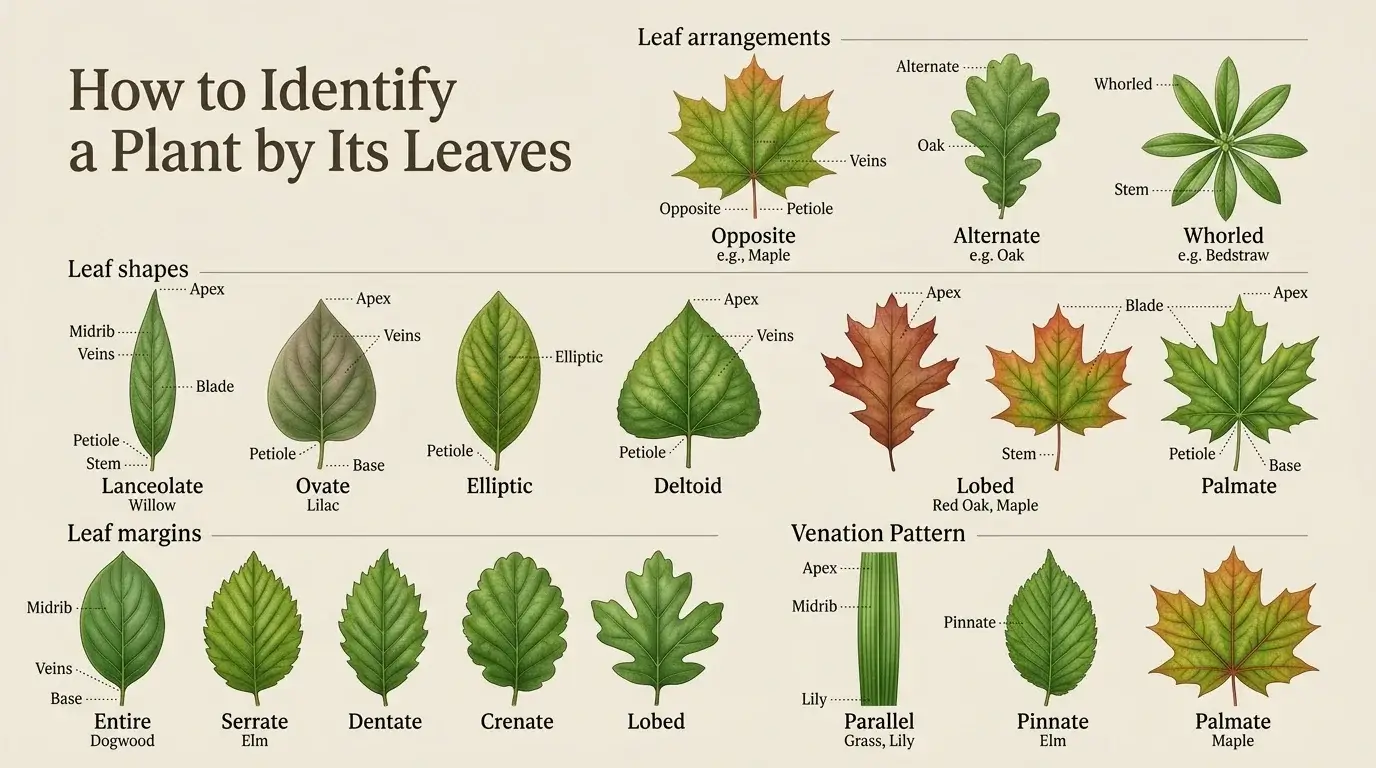
Leaf arrangement describes how leaves grow along a stem. This can help narrow down possible plant species before you examine smaller details.
The three common arrangements to look for are:
- Alternate leaves: One leaf grows at a point on the stem, with the next leaf appearing farther along on the other side.
- Opposite leaves: Two leaves grow across from each other at the same point on the stem.
- Whorled leaves: Three or more leaves grow around the stem at the same point.
You usually need to see part of the stem to check leaf arrangement. An isolated leaf cannot show whether the original arrangement was alternate, opposite, or whorled.
Determine Whether the Leaf Is Simple or Compound
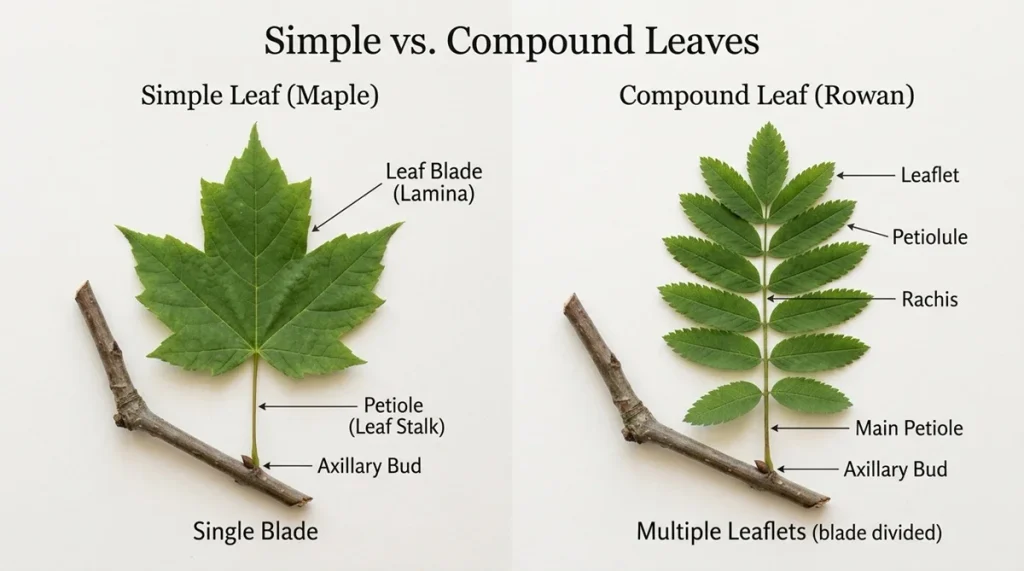
Next, check whether you are looking at a simple leaf or a compound leaf.
A simple leaf has one main blade attached to its leaf stalk, or petiole. The blade can still have deep lobes, but it remains one leaf.
A compound leaf is divided into separate leaflets. These leaflets may grow along a central stalk or spread from one point.
One common identification mistake is treating each leaflet as a separate leaf. Look at where the entire structure connects to the plant stem. A true leaf typically has a bud near the point where its petiole meets the stem, while individual leaflets do not.
Look at the Leaf Shape
Once you know the arrangement and leaf type, examine the overall outline of the blade.
Common leaf shapes include:
- Oval or elliptical: Rounded and usually widest near the middle.
- Ovate: Egg-shaped and generally broader toward the base.
- Lance-shaped (lanceolate): Long and narrow with a pointed end.
- Linear: Very long and narrow with nearly parallel sides.
- Heart-shaped (cordate): Broad near the base with a noticeable notch.
You do not need to know every botanical shape name to identify a plant. Focus first on what the leaf actually looks like, then use botanical terms when they help you compare possible matches.
Examine the Leaf Edges or Margins
The outer edge of a leaf is called its margin. Leaf margins can provide useful clues because plants with similar overall shapes may have very different edges.
Look for patterns such as:
- Smooth (entire): The edge has no obvious teeth or deep divisions.
- Serrated or toothed: The edge has small tooth-like projections.
- Lobed: The blade has deeper rounded or pointed divisions.
- Wavy: The margin curves gently inward and outward.
Check more than one leaf before deciding on the margin type. Insect feeding, disease, weather, or physical damage can make a naturally smooth leaf appear irregular.
Check the Leaf Veins and Venation Pattern
Venation is the pattern formed by the veins running through a leaf. Turn the leaf over if necessary, as the veins may be easier to see on the underside.
Common patterns include:
- Parallel: Several major veins run alongside one another along the leaf.
- Pinnate or netted: A main midrib runs through the center with smaller veins branching from it.
- Palmate: Several main veins spread outward from a point near the base of the leaf.
Compare the vein pattern with other characteristics rather than using venation alone to identify the plant.
Look at the Leaf Surface and Texture
The way a leaf looks and feels can provide another clue.
A leaf may be:
- Smooth
- Hairy
- Rough
- Waxy or glossy
- Leathery
- Thick and fleshy
For example, two plants may have similarly shaped leaves but noticeably different surfaces. Look at both sides because hairs, veins, or other details may be more visible underneath.
Compare Leaf Size, Color, and Other Features
Leaf size and color can support an identification, but they should not usually be your main evidence.
Measure or estimate the leaf’s length and width and note any distinctive color patterns or markings. Then compare these details across several leaves from the same plant.
Remember that color and size can change with leaf age, sunlight, water availability, growing conditions, and plant health. A single yellow, damaged, or unusually small leaf may not represent the plant accurately.
Common Leaf Features Used for Plant Identification
Use several features together when comparing an unknown plant with a possible match.
| Feature | What to Look For | Common Patterns |
| Arrangement | How leaves grow on the stem | Alternate, opposite, whorled |
| Leaf type | Whether the blade is whole or divided | Simple, compound |
| Shape | Overall outline | Oval, ovate, lance-shaped, linear, heart-shaped |
| Margin | Outer edge of the blade | Smooth, serrated, lobed, wavy |
| Venation | Pattern of veins | Parallel, pinnate/netted, palmate |
| Surface | How the leaf looks or feels | Smooth, hairy, rough, waxy, leathery, fleshy |
The more characteristics that agree with a possible plant identification, the more useful that match becomes for further comparison.
How to Identify a Plant From a Leaf Photo
If you cannot confidently match the leaf characteristics yourself, a photo-based Leaf Identifier can help narrow down the possibilities.
The process is simple:
Take a clear photo → Upload it to the Leaf Identifier → Review possible matches → Compare the result with your plant
Treat the result as a starting point rather than relying only on the suggested name. Compare the leaf arrangement, shape, margin, veins, and other visible features with the possible match.
If available, also compare the stem, flowers, fruit, bark, and overall growth habit.
How to Take a Good Leaf Photo for Identification
Photo quality can affect how much useful detail is visible. When photographing an unknown plant:
- Keep the entire leaf visible and in focus.
- Use clear, even lighting.
- Include the point where the leaf attaches to the stem when possible.
- Photograph both sides if they have different features.
- Include several leaves or a wider photo of the plant.
- Avoid using only badly damaged, diseased, or dried leaves.
A wider plant photo can also show leaf arrangement and growth habit, which an isolated leaf cannot provide.
Common Mistakes When Identifying Plants by Leaves
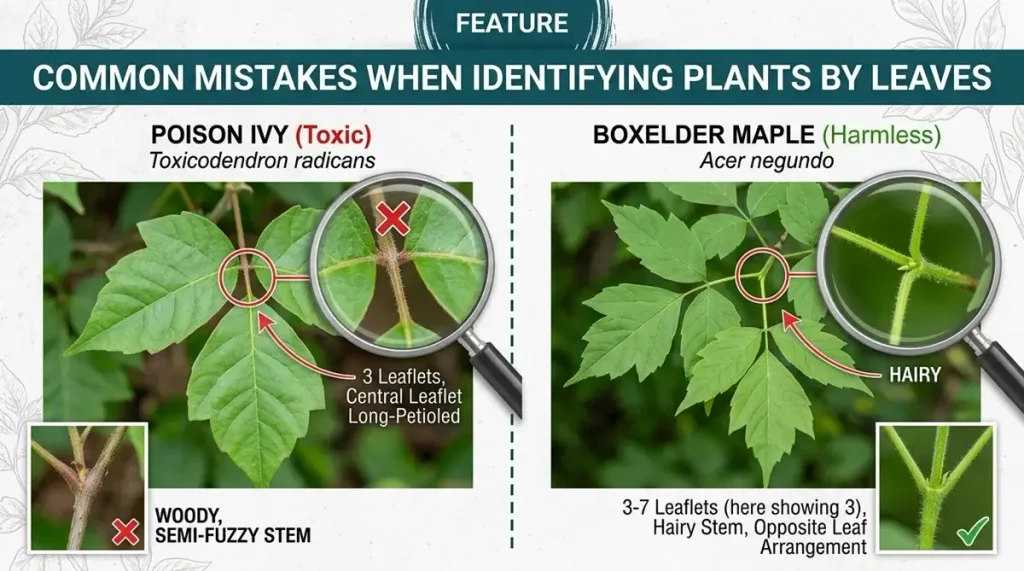
One common mistake is relying on leaf shape alone. Many unrelated plants can have oval, narrow, or heart-shaped leaves, so compare the margin, veins, arrangement, and texture too.
Another mistake is confusing a leaflet with a complete leaf. This can lead you toward the wrong group of plants before identification even begins.
Avoid relying only on leaf color or one damaged leaf. Whenever possible, inspect several healthy leaves and the stem they grow from.
Finally, don’t assume two plants are the same species simply because their leaves look similar. Look for multiple matching characteristics.
What to Do When Leaves Aren’t Enough for Identification
Leaves can narrow down possible plants, but they do not always provide enough information for a confident identification.
If several plants have similar leaves, look for additional characteristics such as:
- Flowers
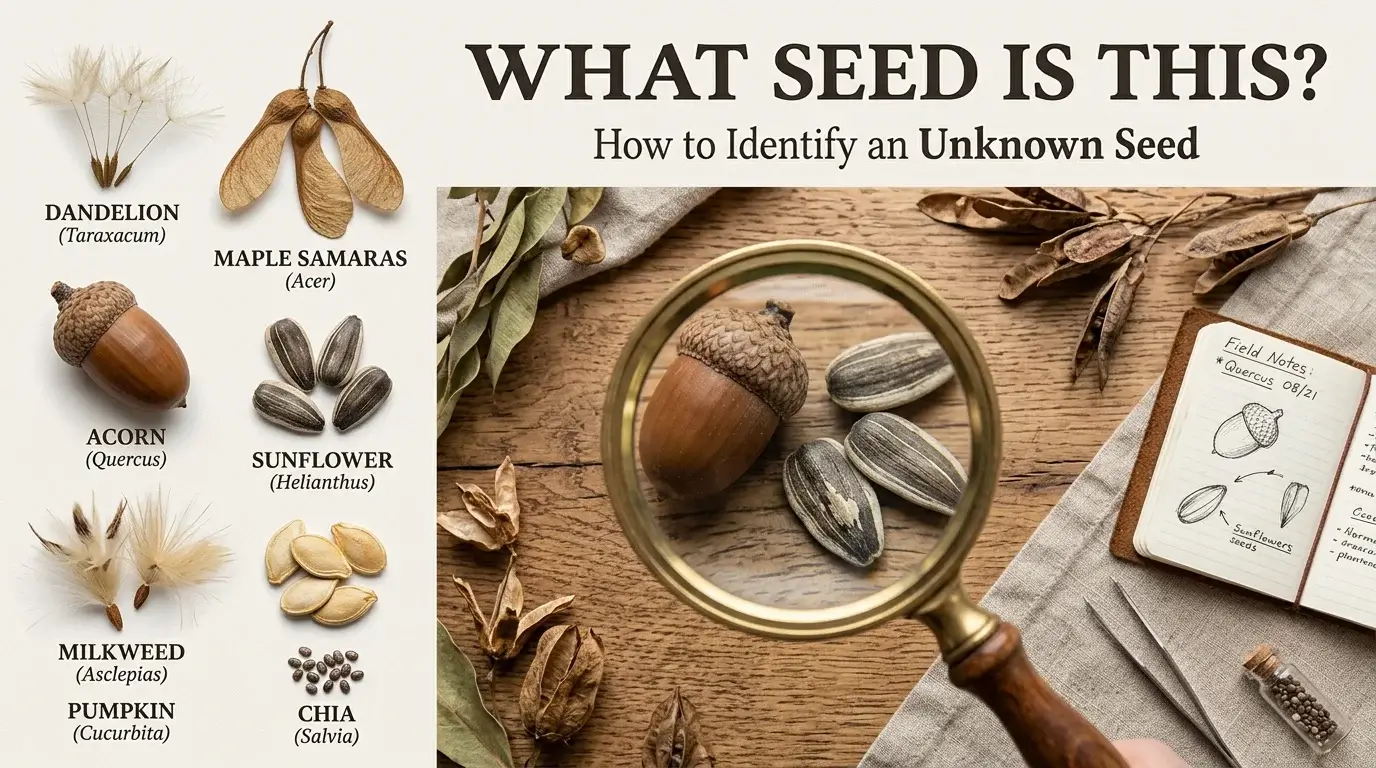
- Fruit or seed structures
- Stem characteristics
- Bark
- Thorns or spines
- Growth habit
- Overall plant appearance
These features can help confirm or rule out a possible match.
For safety, do not eat, prepare, or use an unknown plant medicinally based only on a visual or automated identification. Seek reliable expert confirmation when accurate identification is important.