If you’re wondering “what plant is this?”, start with a clear photo showing the plant’s most distinctive features. A plant identifier can suggest a likely match, while details such as leaf shape, flowers, stems, fruit, bark, and growth habit can help you confirm the identification.
How to Identify an Unknown Plant From a Photo
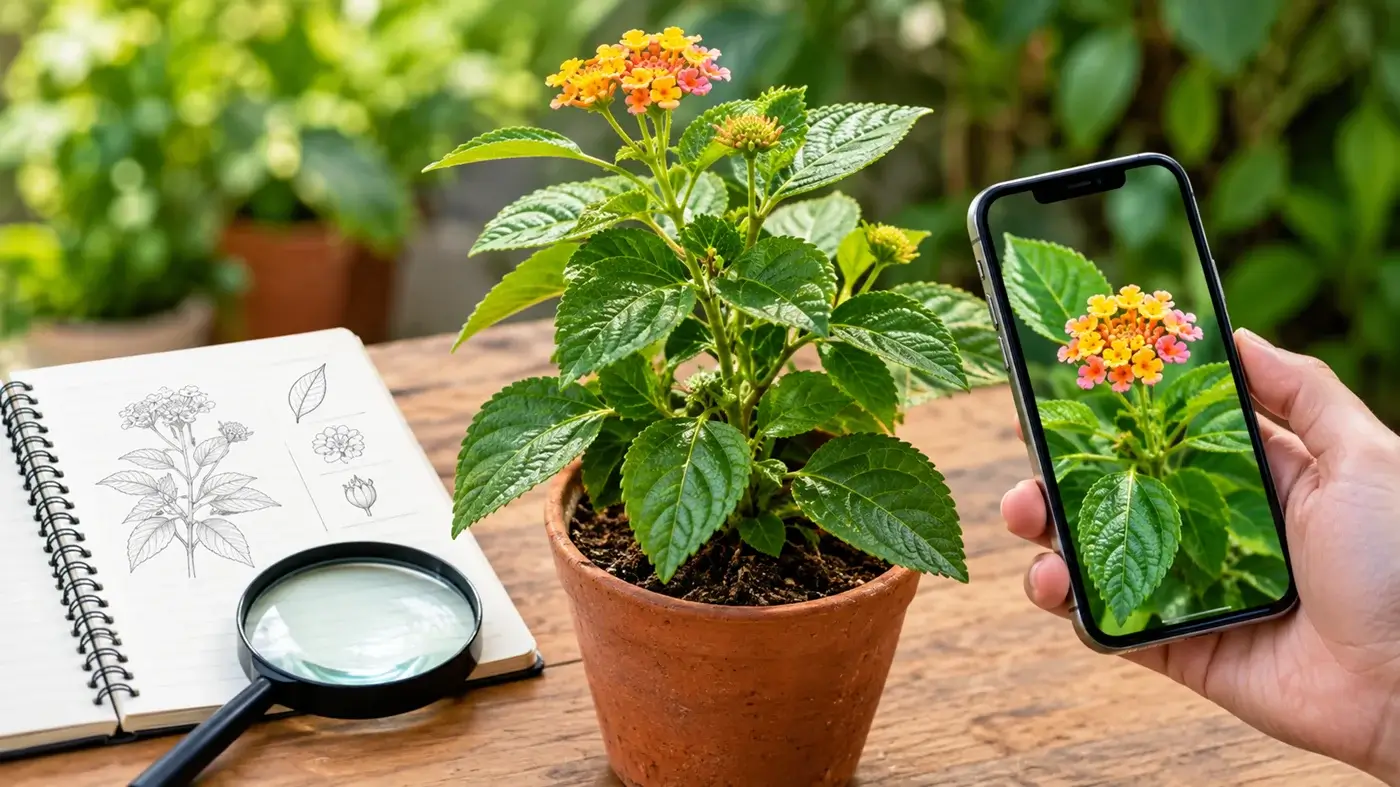
A photo is one of the easiest starting points when you don’t know a plant’s name. Instead of trying to compare it with hundreds of species manually, you can upload an image to a plant identifier and review the suggested match.
For a better result:
- Take a clear, well-lit photo of the plant.
- Upload the image to the plant identifier.
- Review the suggested common and scientific name.
- Compare the result with the plant’s visible characteristics.
Don’t rely on the name alone. Check whether the leaves, flowers, stems, and overall growth of the suggested species match the plant in front of you.
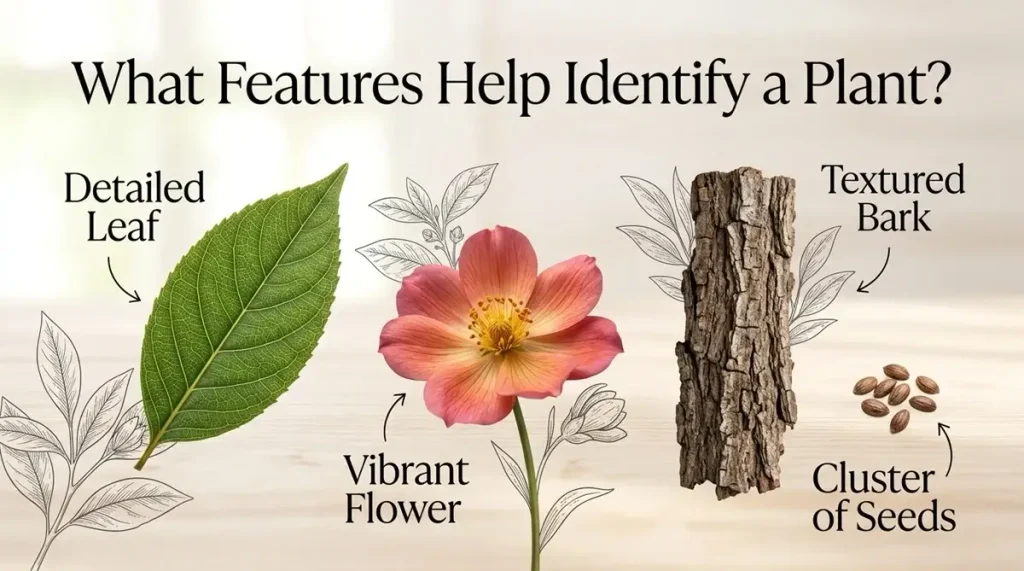
What Features Help Identify a Plant?
Plants can share similar colors and shapes, so identification is more reliable when you consider several features together. Pay particular attention to the parts that make the unknown plant distinctive.
Leaves
Start with the leaf shape. Notice whether the leaves are narrow, round, heart-shaped, oval, lobed, or another form.
Next, examine the leaf margins, or edges. They may be smooth, toothed, wavy, or deeply divided. Look at how leaves are arranged along the stem and at their vein pattern, known as venation.
Leaf color and texture can provide additional clues. For example, a leaf may be glossy, rough, hairy, thick, or soft.
Flowers
If the plant is flowering, examine the flowers closely. Look at their color, shape, size, number of petals, and whether they appear individually or in clusters.
Flowers can provide useful identifying characteristics, especially when several plants have similar leaves.
Stems and Bark
Look at whether the stem is soft and green or woody. Check for hairs, ridges, thorns, unusual colors, and branching patterns.
For trees and woody shrubs, bark texture and appearance can provide additional clues when leaves alone aren’t enough.
Fruit and Seeds
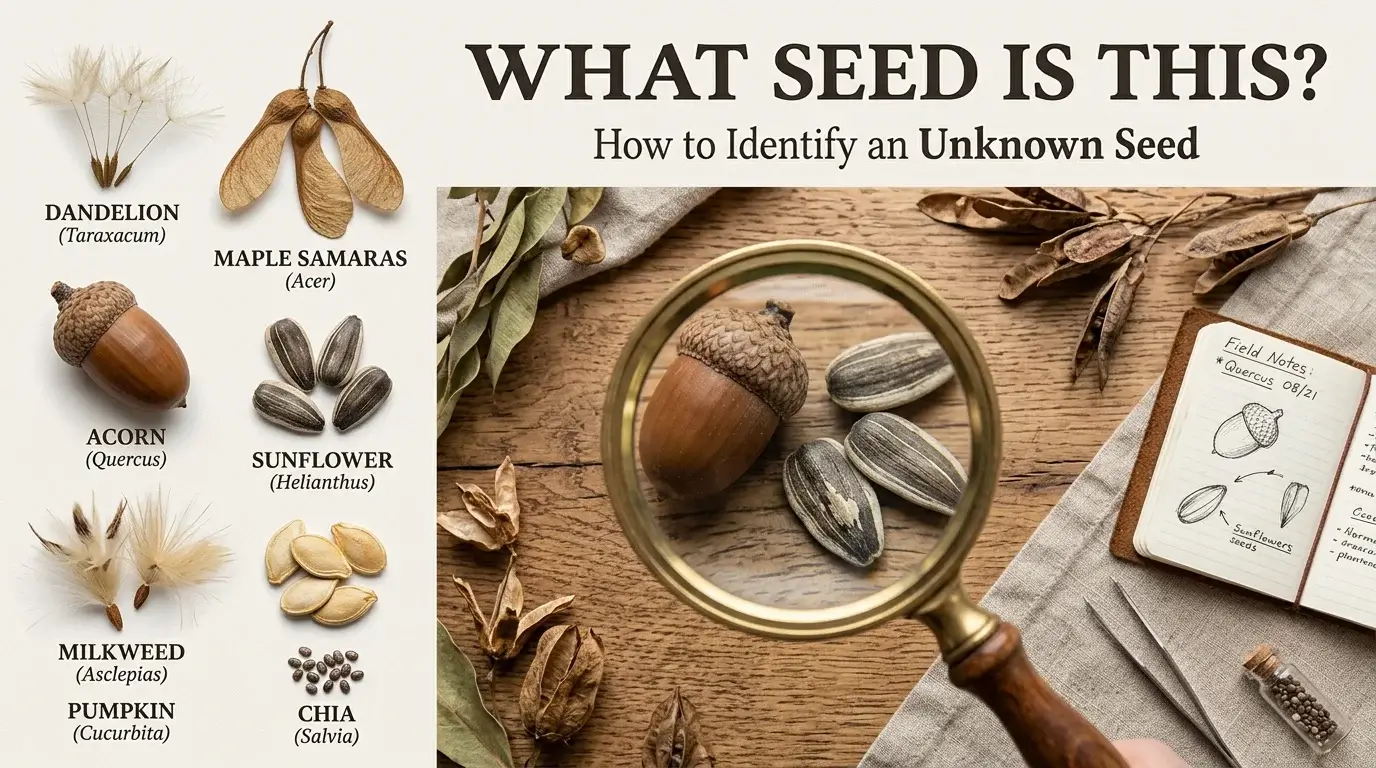
Fruit and seeds can make an unknown plant easier to distinguish. Look for berries, pods, cones, capsules, seed heads, or other visible structures.
Note their shape, color, size, and how they are arranged on the plant.
Growth Habit
Step back and look at the whole plant. Is it growing as a tree, shrub, vine, herb, groundcover, or grass-like plant?
Its overall size, shape, and growth pattern can help narrow down possible species.
How to Identify a Plant by Its Leaves
You can often narrow down a plant identification by its leaves, especially when flowers or fruit aren’t present.
Use this simple sequence:
Shape → Edges → Arrangement → Veins → Texture
First, determine the overall leaf shape and examine its edges. Then check how the leaves grow on the stem. They may appear opposite each other, alternate from side to side, or form groups around the stem.
Finally, examine the veins and texture. Combining these characteristics provides more useful information than relying on leaf color alone.
If leaves are the clearest feature available, you can also use a Leaf Identifier or follow a detailed guide to identifying plants by their leaves.
How to Identify a Plant Without Flowers
You don’t necessarily need flowers to identify an unknown plant. When no flowers are visible, combine as many other clues as possible.
Check the plant’s:
- Leaves and their arrangement
- Stem or bark
- Overall growth habit
- Fruit or seeds, if present
- Growing environment
- Geographic location
For example, knowing whether a plant is a climbing vine growing in a shaded woodland or a small herb growing in a sunny lawn can help narrow the possibilities.
However, some closely related species are difficult to distinguish without flowers, fruit, or other diagnostic features. In these cases, it may be safer to identify the plant only to a broader group until more features become visible.
How to Take a Clear Photo for Plant Identification
The quality of your plant photo can make a big difference in how much identifying information is available.
Photograph the plant in good light and make sure the important features are in focus. Avoid taking the picture from so far away that individual leaves or flowers cannot be seen.
When possible, take several photos:
- One showing the whole plant
- A close-up of the leaves
- A photo of flowers or fruit
- A clear view of the stem or bark
- Another angle showing distinctive features
Try to keep the unknown plant as the obvious subject. If several different plants fill the same image, it may be harder to determine which one you want to identify.
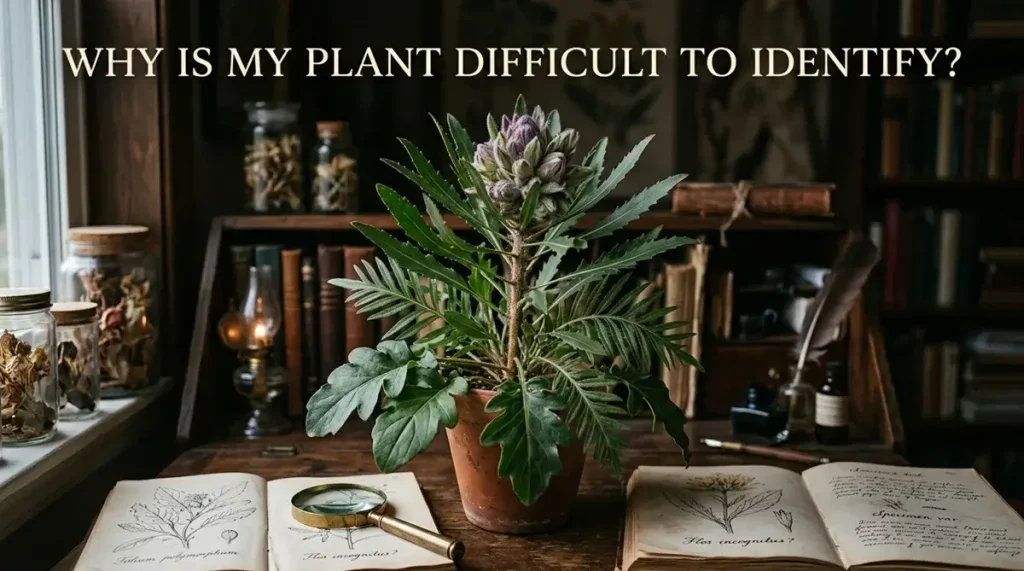
Why Is My Plant Difficult to Identify?
Sometimes a plant identifier cannot provide a clear match, or several possible species may look convincing.
A blurry or distant photo may hide important details such as leaf edges and veins. Take another picture closer to the plant and make sure it is sharply focused.
If only one plant part is visible, photograph additional features. A leaf may provide useful clues, but adding flowers, fruit, stems, or the whole plant can provide more evidence.
If several plants are visible, take a new photo that clearly focuses on the plant you want to identify.
The problem may also be the plant itself. Closely related species can share very similar leaves, flowers, and growth habits. A photo may sometimes narrow the possibilities without providing enough evidence for a confident species-level identification.
How to Confirm a Plant Identification
Treat a photo-based result as a suggested identification and compare it with the actual plant before assuming it is correct.
Check whether the suggested species matches the plant’s:
- Leaf shape and arrangement
- Flowers
- Stem or bark
- Fruit and seeds
- Growth habit
- Habitat
- Geographic range
Also compare the suggested plant with similar species or known lookalikes. If several important characteristics don’t match, take additional photos and try the identification again.
You can also compare the plant with reliable botanical references or seek help from an experienced local identifier when an exact identification is important.
Never rely solely on a photo-based plant identification when deciding whether an unfamiliar plant is safe to eat, use medicinally, or handle. Similar-looking species can have very different properties.
Not sure what plant you’ve found? Upload a clear photo to the Free Plant Identifier to get a suggested match, then compare the result with the plant’s visible features.